🏫 Formby High School β€’ Secondary Science Portfolio (Yr 7 βž” Yr 11 GCSE) πŸ”¬ Student: Zefan β€’ πŸ—ΊοΈ 5-Year Curriculum Roadmap
← Back to Notebook Cover Entry 01

🧬 Animal vs Plant Cells: What Are Cells Made Of?

✍️ "A cell is the fundamental microscopic Lego brick of life. Every living creature is either unicellular (like a 1-celled amoeba) or multicellular (like humans with 37 trillion cells!). Here is my detailed recall comparing Animal and Plant cells with the Formby High campus analogy!"
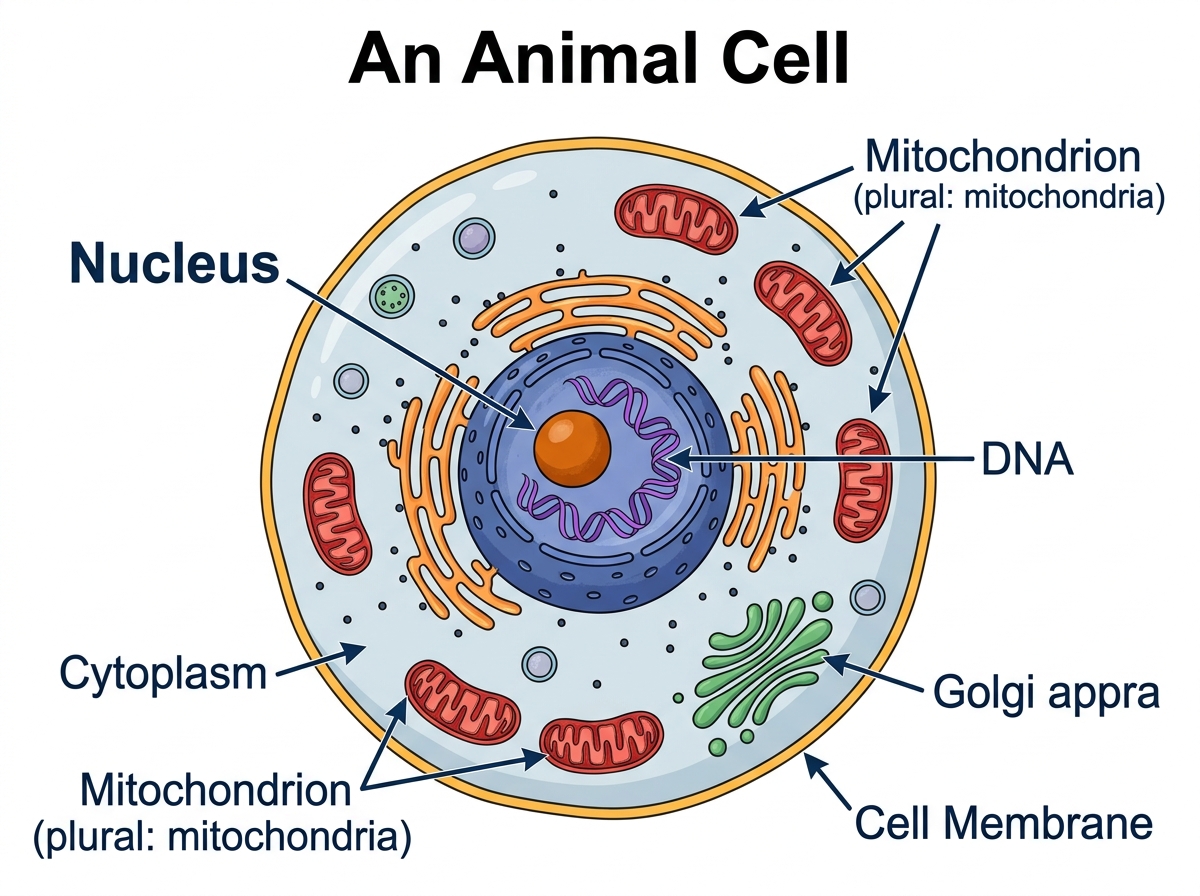
Animal Cell

What Animals & Humans are Made Of

Animal Cell

4 Key Organelles or-guh-NELL:

1. Nucleus 🧠 NEW-klee-us

The control centre of the cell containing genetic material (DNA). Directs all cell activities.

🏫 Analogy: The Headteacher's Office β€” it holds all school records, sets the rules, and manages operations!
2. Cytoplasm πŸ₯£ SY-toh-plaz-um

Jelly-like fluid filling the cell where most chemical reactions take place.

🏫 Analogy: The School Corridors & Classrooms β€” where everyone moves around and daily learning happens!
3. Cell Membrane πŸšͺ sel MEM-brayn

Flexible barrier; selectively controls what enters (glucose, oxygen) and leaves (waste).

🏫 Analogy: The School Gates & Security β€” checking student passes at the entrance!
4. Mitochondria ⚑ my-tuh-KON-dree-uh

The powerhouses; carry out aerobic respiration, releasing energy from glucose.

🏫 Analogy: The Boiler Room / Solar Panels β€” keeping the power and heating running 24/7!
*(Bonus) Ribosome 🧱 RY-buh-sohm

Tiny protein factories that assemble amino acids into proteins (muscle, enzymes).

🏫 Analogy: The School Canteen / Kitchen β€” cooking up nutritious supplies!
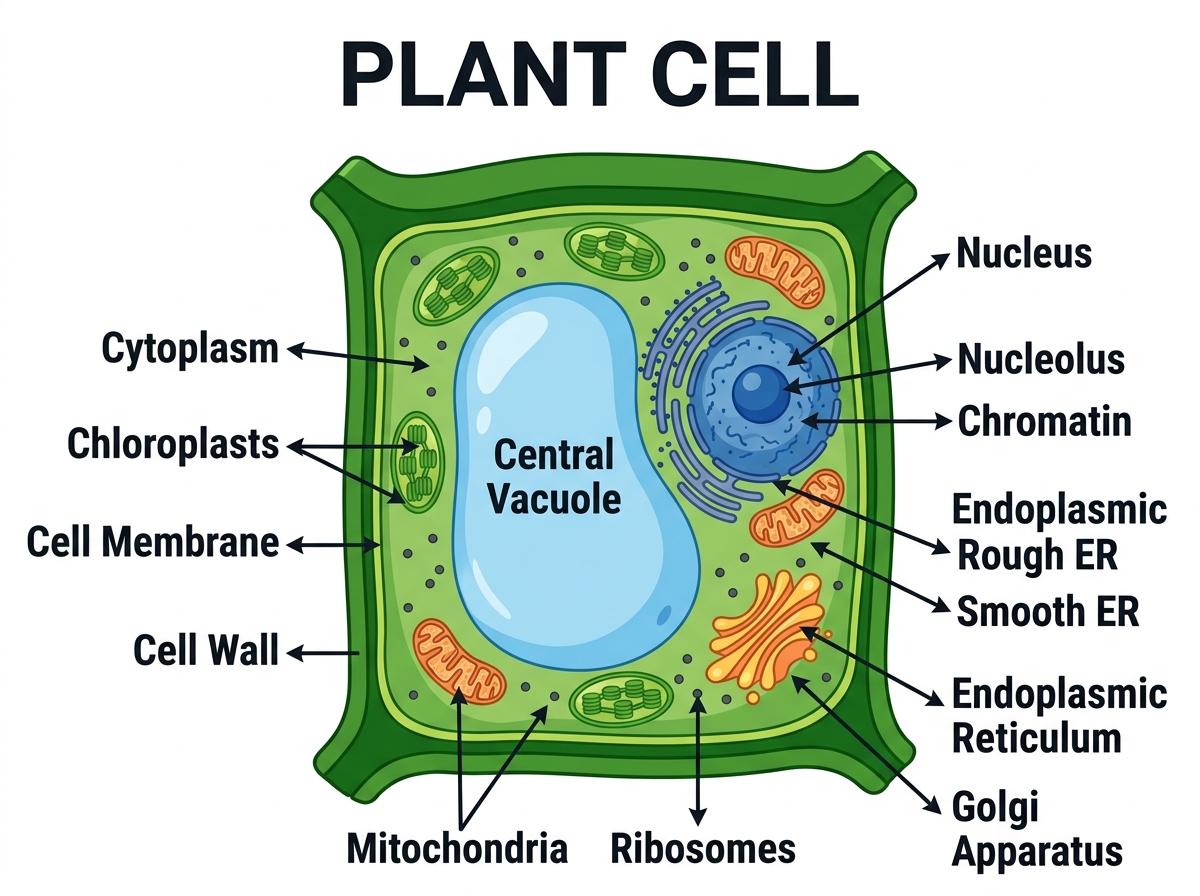
Plant Cell

What Trees & Plants are Made Of

Plant Cell

Has All Animal Parts + 3 EXTRAS!

1. Cell Wall 🧱 sel wawl

Tough outer layer made of cellulose (SEL-yuh-lohs). Keeps the plant standing rigid without a skeleton.

🏫 Analogy: The Sturdy External Brick Walls β€” preventing the whole school building from collapsing!
2. Chloroplasts πŸƒ KLOR-uh-plast

Green discs containing chlorophyll (KLOR-uh-fil) that absorb sunlight to make food via photosynthesis.

🏫 Analogy: The Rooftop Solar Cookers β€” cooking free organic meals using sunlight!
3. Permanent Vacuole πŸ’§ PER-muh-nuhnt VAK-yoo-ohl

Giant central sac filled with watery cell sap. Exerts outward pressure to keep the cell firm (turgid).

🏫 Analogy: A giant Pressurised Water Storage Tank β€” keeping all the pipes pressurized!
πŸ’‘ Exam Memory Trick: Remember the 3 C's / V's: Cell Wall, Chloroplasts, and Vacuole!
πŸ€” Question I Asked: "Does a plant cell's nucleus look different to an animal cell's?"

Inside the Nucleus (Anatomy):

They are almost identical! Both are spherical, surrounded by a double nuclear membrane with pores, contain genetic code (DNA/chromatin), and have a dense nucleolus (new-KLEE-oh-lus) inside.

Position in the Cell (The Big Difference!):

In an animal cell, the nucleus floats right in the centre. But in a plant cell, the huge permanent vacuole takes up the entire middle, pushing the nucleus flat against the outer cell wall!

Next Entry: πŸ—£οΈ Word Bank & Syllable Pronunciation Guide β†’